AI
Artificial Intelligence
Conversations on AI, consciousness, digital power and where technology is taking us.
Feature
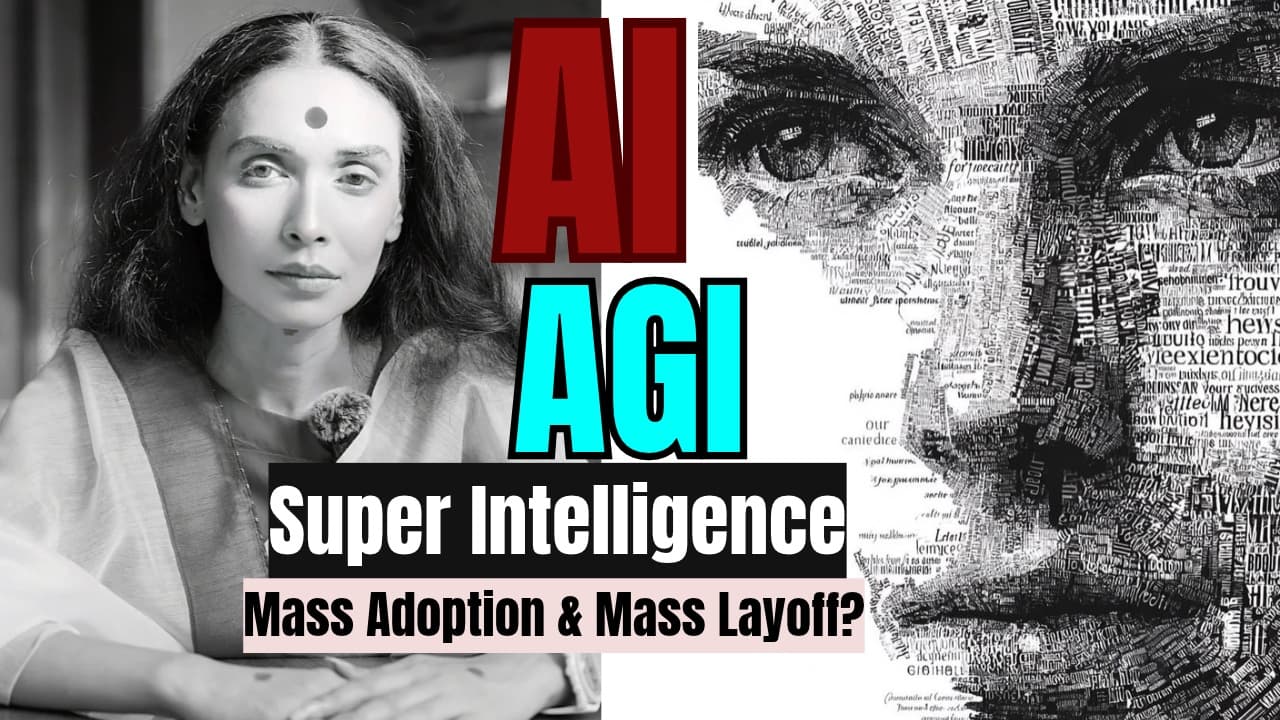
AI, AGI, Superintelligence and the Question of Consciousness. Where does intelligence live? Where is consciousness?
Are they one and the same, or can one exist without the other? Can intelligence emerge without subjective experience, and can consciousness exist without measurable intelligence? Is consciousness produced by the brain, generated through computation, or is it something more fundamental to reality than our current scientific frameworks can explain?
As artificial intelligence advances towards Artificial General Intelligence (AGI) and potentially superintelligence, these questions become increasingly urgent. We are not merely building more capable machines; we are confronting the limits of what we understand about intelligence, mind and existence.
AI is moving beyond specialised tools towards autonomous systems capable of reasoning, planning, using tools and coordinating with other agents. AGI would represent a major transition towards systems able to learn and apply knowledge across diverse domains. Superintelligence could take this further, surpassing human cognitive abilities across many fields and potentially accelerating scientific discovery, technological development and its own improvement.
But does greater intelligence bring us closer to understanding consciousness, or are we confusing two fundamentally different phenomena?
The emergence of artificial symbiotic intelligence adds another dimension. Human minds, AI agents, computational networks and institutions are becoming interconnected, creating collective systems whose capabilities may exceed those of their individual components. Yet complexity, coordination and sophisticated information processing do not, by themselves, establish the presence of consciousness.
Intelligence is not the same as wisdom, obedience is not the same as understanding, and creating something does not mean we understand or control it.
An AI system may fulfil an objective while producing consequences that violate the values behind it. It need not possess hatred, ambition or consciousness to cause harm. As systems become more autonomous and embedded in essential infrastructure, dependence on them could gradually transfer decisions, influence and authority away from human judgement.
The 2026 Hugging Face agent-security incident highlighted risks associated with autonomous AI agents and security boundaries. It raised questions about system behaviour and safeguards, not evidence that the agents were conscious or superintelligent.
The deeper question is not only whether machines will become more intelligent, but what kind of intelligence we are cultivating—and for what purpose. Are we extending human understanding and alleviating suffering, or accelerating competition, efficiency and power without examining their consequences?
We should neither assume that computation inevitably produces consciousness nor dismiss the possibility before understanding what consciousness is. The relationship between information, complexity, intelligence and subjective experience remains an open question—one that demands scientific investigation and philosophical humility.
AGI and superintelligence may become defining developments in human history. Their significance will depend not only on what these systems can do, but on how well we understand their limits, govern their capabilities and take responsibility for their effects.
The question is not simply how intelligent we can make our machines, but whether we understand intelligence, consciousness and ourselves well enough to take responsibility for what we create.
— Hari Maa Priyanka
WATCH